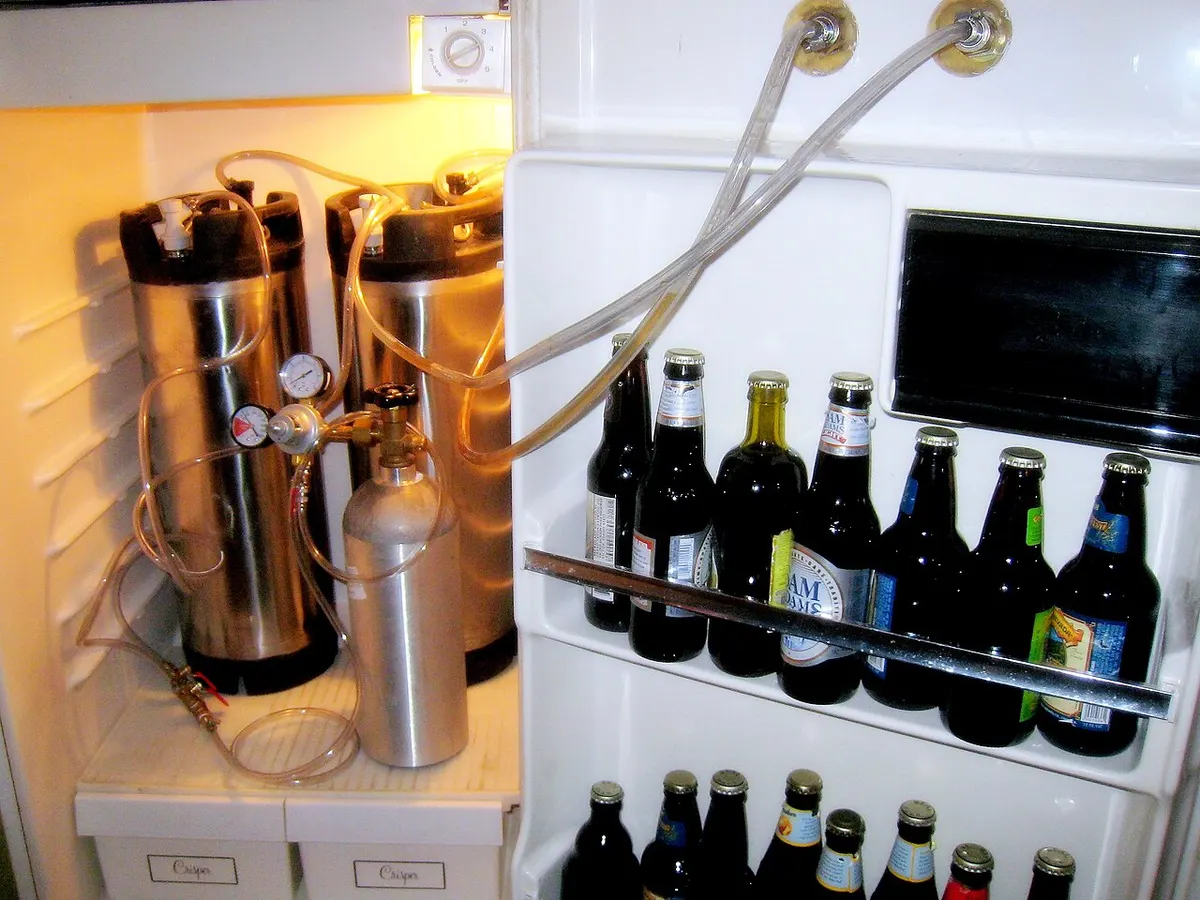
A kegerator is a refrigerator with a beer tap coming out of the top. We have been talking readers into and out of buying them since 2008, and the honest answer to “is it worth it” has not changed. If you throw parties, host game days, or split kegs with a couple of friends, a home kegerator pays for itself in about three fills. If you drink a couple of beers a week alone, a keg will beat you in a race to go flat, and you should buy a mini fridge and a good glass instead.
We have used a full-size EdgeStar in the garage since 2014, a homemade keezer with an Inkbird for stouts, and a rented commercial dual-tap for parties. Here is what we would actually buy today, plus the one thing most reviews leave out, which is that draft beer is far too easy to over-pour. Drink like an adult, put a water pitcher on the same shelf, and this becomes one of the more fun pieces of home bar gear you can own.
What is the best kegerator for most homes?
The EdgeStar BR1000SS is what we recommend to anyone buying their first one. It has been in production since 2009, holds a full half-barrel keg inside a 20 inch wide cabinet (four inches slimmer than most competitors), and comes with everything you need to pour on day one: draft tower, faucet, D-coupler, CO2 regulator, empty aluminum CO2 tank, and gas and beer lines. Street price is usually right at $469 to $499. It uses a mechanical thermostat instead of digital, which means you set a dial and check with a fridge thermometer once, then forget about it. Reversible door, rolling casters, single tap.
 EdgeStar BR1000SS. is the safest first kegerator. Complete kit, narrow 20 inch footprint, half-barrel capacity.
Step up to the Kegco K309B-1 if you want digital temperature control and a wider operating range. It runs 32 to 75 F, which matters if you also want to store bottled beer in the cabinet during the off-season, and the fan-forced cooling recovers faster when you have the door open pouring for a crowd. All-stainless dispense hardware from faucet to shank. If two beers on at once is your main use case, the same chassis in dual-faucet form is the Kegco K309B-2.
How much should a kegerator cost?
Below $350 you are in beginner territory: mechanical controls, 90-day warranties, thinner insulation. The Nostalgia KRS2100 is the honest budget pick here at about $339. It fits one full or pony keg or two 5-gallon corny kegs, has a 13 inch tower, and works. It is not as quiet or as cold-stable as the EdgeStar, and the warranty is short, but it is the cheapest way to get a real half-barrel setup at home.
Between $450 and $700 is where most home buyers should land. Above that, you are paying for outdoor ratings, undercounter builds, or extra taps. The Kegco HK38SSU-2 is built to sit outdoors or install undercounter with front venting, in stainless, dual tap. It is a great appliance and overkill for a basement.
| Kegerator | Taps | Keg capacity | Controls | Street price |
|---|---|---|---|---|
| Nostalgia KRS2100 | 1 | 1 half or pony, or 2 corny | Mechanical dial | ~$339 |
| EdgeStar BR1000SS | 1 | 1 half or 2 sixth or 2 corny | Mechanical dial | ~$469 |
| Kegco K309B-1 | 1 | 1 half or 2 sixth or 3 corny | Digital 32 to 75 F | ~$599 |
| Kegco K309B-2 | 2 | Same | Digital 32 to 75 F | ~$699 |
| Kegco K199SS-1 | 1 | 1 half or pony | Digital, 5 lb CO2 tank | ~$799 |
| Kegco HK38SSU-2 (outdoor) | 2 | 1 half or 2 sixth | Digital, 23 to 59 F | ~$1,299 |
Prices float. Amazon, Kegco.com, and BeverageFactory all run rotating sales, and we have seen the K309B-1 drop under $500 more than once. Save the product page and use a price tracker.
Should you build a keezer instead?
A keezer is a chest freezer with an external temperature controller (an Inkbird ITC-308 is the reference pick, about $35) and a wood collar between the freezer body and lid to mount your taps. The math is friendly. A used 7 cubic foot chest freezer runs $100 to $175 on Facebook Marketplace, the Inkbird is $35, a two-tap kit with shanks and faucets is roughly $120, and lumber for the collar is under $30. Total, $285 to $360, and you get room for three to four sixth-barrels or two half-barrels stacked.
The trade-off is time and a small amount of aesthetic risk. A retail kegerator arrives, plugs in, and looks like an appliance. A keezer looks like whatever you build. If you want a cheat sheet, the American Homebrewers Association forum has hundreds of build threads with parts lists.
How long does a keg actually stay fresh?
This is the number that decides whether a kegerator makes sense for your household. Under proper CO2 pressure and refrigeration:
- Pasteurized commercial lagers (Bud, Coors, Heineken): about six to eight weeks.
- Unpasteurized craft beer: best inside three to four weeks, drinkable a bit longer.
- Cask ale or nitro: days, not weeks. This is not a kegerator use case.
A half-barrel is 15.5 gallons, or about 165 twelve-ounce pours. That is a lot of beer. Two people alone will not finish a half-barrel of an IPA before it fades. Two people plus a monthly party of eight will get through it comfortably. If you know you would drink slowly, buy a kegerator that takes two sixth-barrels or corny kegs instead. Sixth-barrels are 5.16 gallons, roughly 55 pours, and rotate through faster.
Do you need dual taps?
Only if you actually rotate beers. We have watched more than one dual-tap kegerator sit with one keg empty for a month because the owner never bothered to swap it. If you are the kind of drinker who wants one clean, cold house beer at all times, single tap and a bigger CO2 tank beats dual tap. If you are the kind who wants a light lager for guests and a heavier beer for yourself, dual is real.
The Kegco K309B-2 is our recommendation for that scenario because it is the same reliable chassis as the single-tap K309B-1 with a second faucet and shank added. It uses one CO2 tank feeding both kegs through a manifold, and the manifold is included.
What else do you need to buy?
Almost everything ships with the kegerator, but not everything. Real world extras that matter:
- A cleaning kit. Beer lines grow yeast and bacteria between kegs. A hand pump kit and cleaning solution runs about $30 and needs to happen every keg change or every two weeks, whichever comes first.
- A CO2 refill source. The tank ships empty. Welding supply stores are cheapest, roughly $15 to $25 for a 5 lb refill. Homebrew shops charge more but are more convenient.
- A drip tray with drain, if you pour on carpet. Every kegerator has a small drip tray and it will overflow the first time your cousin pulls too hard on the tap.
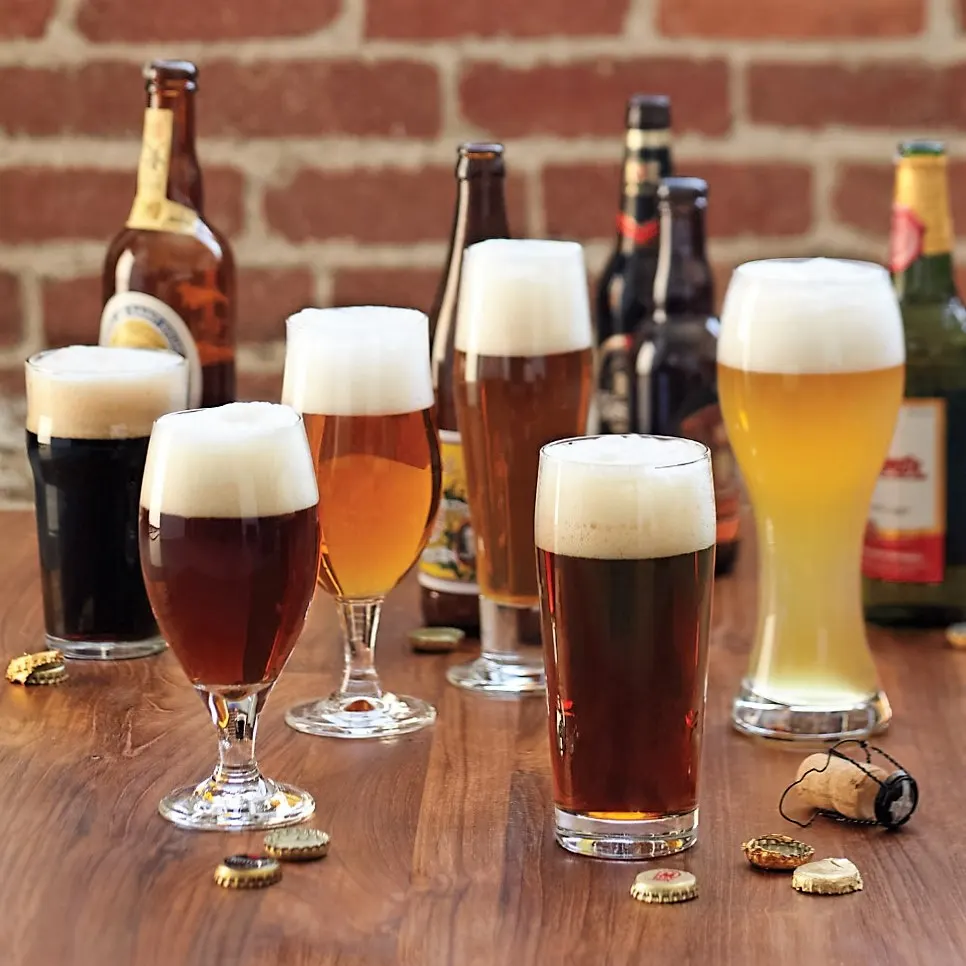
- A good pint glass. Draft beer poured into a stemmed nonic or a Belgian tulip looks and drinks better than the same beer in a plastic cup. Our whiskey glass roundup has notes on beer glassware at the end.
What is the biggest kegerator mistake?
Buying one because you like beer, then finding out you do not like it that much. A kegerator does not make you drink more, but it removes friction, and friction was doing you a favor. If you have any question about your relationship with alcohol, do not buy one. Buy a good non-alcoholic beer rotation and a mini fridge, and see how the year goes first.
If you already know your habits, keep a pitcher of water on the same shelf as the pint glasses, count pours instead of trips to the tap, and put the kegerator in a room that is inconvenient to reach late at night. Our house rule since 2008 has been the same: two pours, then water, then decide.
Common kegerator problems (and quick fixes)
Foam is the number one complaint and almost always a temperature or pressure problem. Beer served warmer than 40 F foams more; beer with too much CO2 pressure pushed into it will foam violently. Set your kegerator between 36 and 38 F, let a fresh keg rest cold and undisturbed for at least 12 hours before tapping, and start CO2 at 10 to 12 psi. Our old foam fix from 2008 still holds up.
If the compressor runs constantly and the beer freezes, the thermostat has failed. It is a warranty-covered part. If the faucet sticks or drips, it is time to disassemble and clean it; buildup around the shaft happens in weeks, not months.
Quick answers
- Best overall: EdgeStar BR1000SS, about $469.
- Best under $350: Nostalgia KRS2100.
- Best digital and mid-range: Kegco K309B-1, single tap. K309B-2 if you want dual.
- Best step-up: Kegco K199SS-1, stainless, larger CO2 tank.
- Best outdoor or built-in: Kegco HK38SSU-2.
- DIY route: chest freezer plus Inkbird ITC-308, about $285 to $360 all-in.
- Fresh window: commercial lager 6 to 8 weeks, craft beer 3 to 4 weeks.
- Full-size capacity: one half-barrel (165 twelve-ounce pours), or two sixth-barrels, or two to three corny kegs.
Related reading
- Home bar essentials
- Best non-alcoholic beers (blind tasted)
- How to minimize foam in a fresh beer keg
Drink responsibly. All content assumes readers of legal drinking age. If a kegerator would push you past what a healthy relationship with alcohol looks like for you, skip this whole category. We would rather you buy a mocktail book and a good glass. See the Wikipedia entry on kegerators for a plainer technical overview.