We have been reviewing bar gear since 2008, and beer glassware is the category we get asked about the most. Not because it is complicated. Because most people default to whatever pint glass their friend stole from a bar in college, and they wonder why their $18 four-pack of double IPA tastes flat. The glass matters. Not because it changes the beer, but because it changes how much of the beer actually reaches your nose and tongue.
Below is our short list of the best beer glasses by style, tested with the beers we actually drink, priced from what we last paid on Amazon in August 2026. As always, drink less and drink better; a $2 pint glass poured well beats a $40 crystal tulip poured lazy.
Which beer glass should you actually buy?
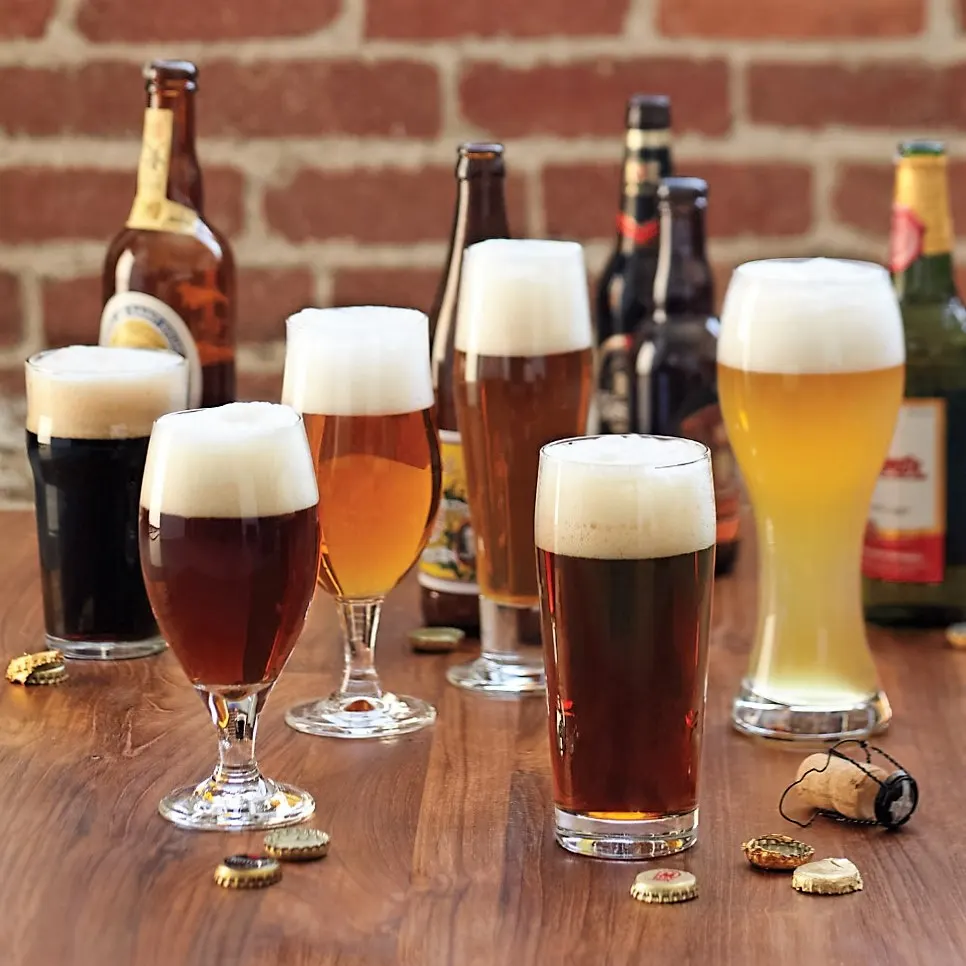
Most home drinkers only need three glasses in the cabinet. A four-pack of shaker pints for lagers and session ales. A four-pack of pilsner glasses for anything pale, crisp, and carbonated. A pair of stemmed tulips for the fancy stuff (IPAs, Belgian ales, barrel-aged stouts). That covers 95% of what you will pour. Add a weizen glass if you drink hefeweizens, a snifter if you drink barleywines, and a beer-taster set if you like to flight.
The short list, by style
 Libbey Craft Brews Assorted Beer Glasses Set of 6. for a pilsner, English pub, Belgian ale, stout, wheat, and craft pub glass. If you buy one set, buy this one.
Shaker pint (aka American pint)
The straight-sided 16 oz glass on the bar rail everywhere. Cheap, stackable, doubles as a Boston shaker tin. Pours cleanly, drinks fast. Not aromatic, not fussy. Great for lagers, ambers, brown ales, session IPAs, and pilsners in a pinch. About $15 for a set of four.
The knock against shaker pints is that the wide mouth lets aromatics escape and the straight walls kill head retention. True. But we still use them for the beer we drink casually. Save the tulip for the beer that earns it.
Nonic pint
The English 20 oz version with the bulge near the rim. That bulge (the “no-nick”) stops the rim from chipping when glasses are stacked, and it gives your hand a natural resting spot. Better for bitters, milds, stouts, and porters. Holds more foam than a straight sided pint.
Libbey Craft Brews Assorted Beer Glasses Set of 6. includes an English pub / nonic style. Or grab dedicated 20 oz nonics from a restaurant supply for each.
Pilsner glass
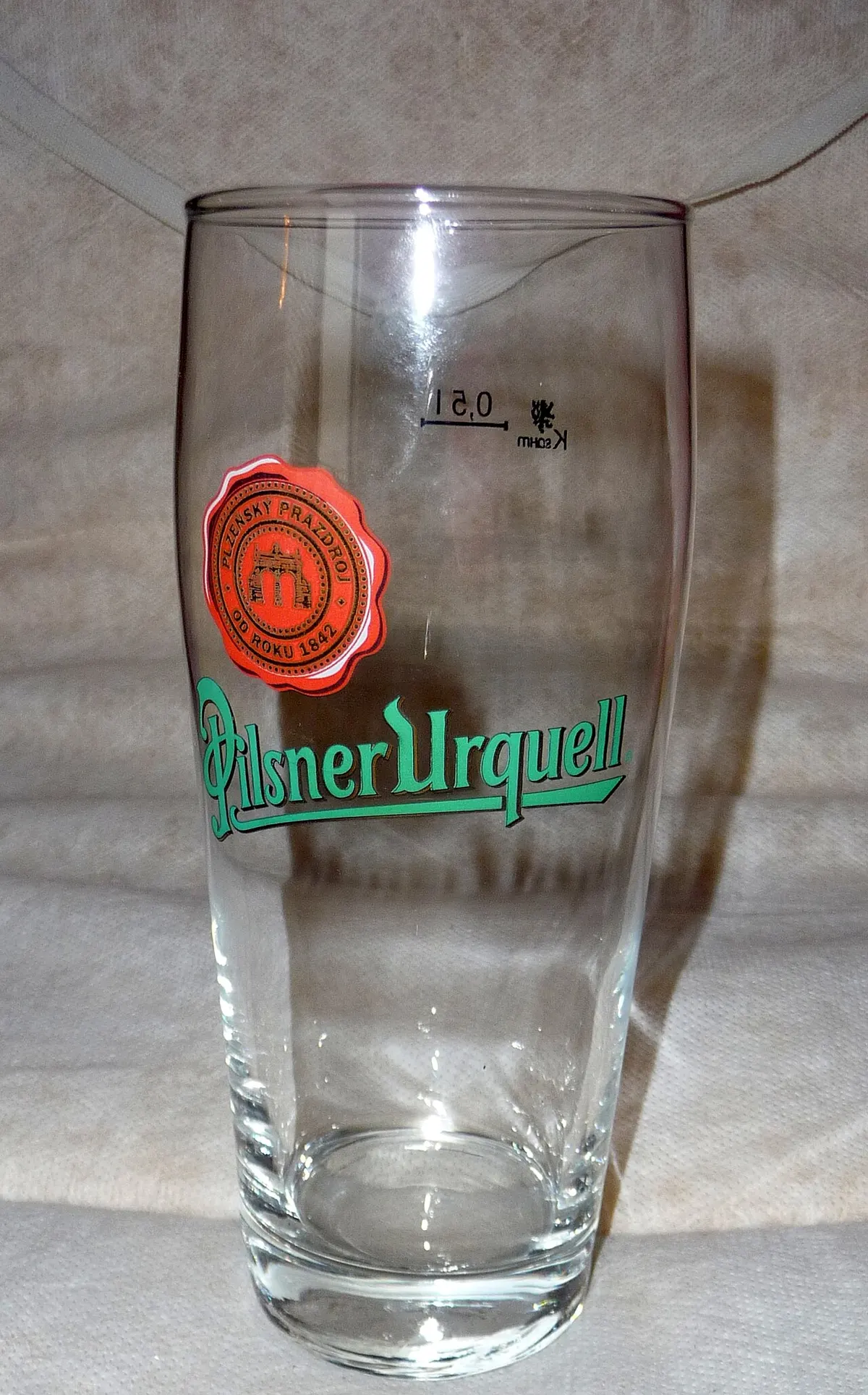 Photo: Wikimedia Commons contributor, CC BY-SA 3.0, via Wikimedia Commons
Tall, tapered, sometimes footed. Made to hold a pilsner or pale lager in a column of gold with a tight white head on top. The narrow shape preserves carbonation longer than a pint glass, and it looks the part.
Our pick: the Libbey 12-Piece International Beer Glass Set, 16 oz, about $28. Simple, tapered, dishwasher safe. Also good for wheat lagers, Kolsch, and helles.
Weizen glass (wheat beer glass)
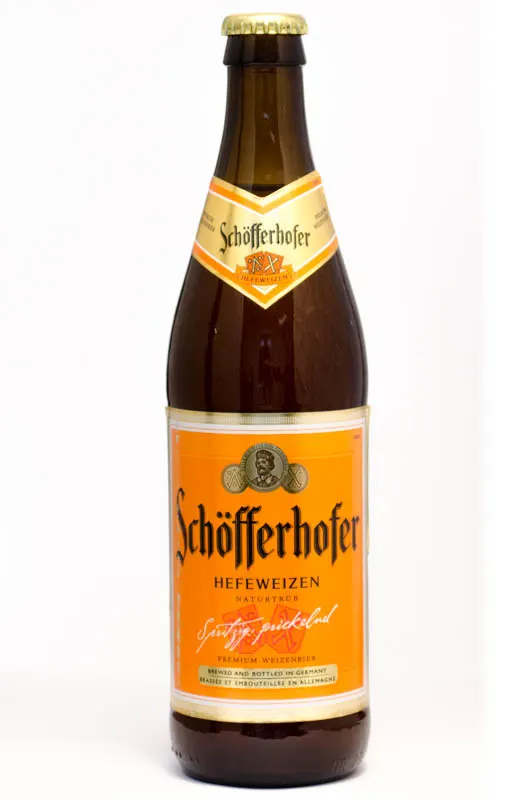 Photo: Ccyyrree, CC0, via Wikimedia Commons
Tall, curvy, wider at the top than at the base. Built for the aggressive foam and banana / clove aromatics of a German hefeweizen. Pour aggressively down the center to build the head; that foam is where the aroma lives.
If you drink hefeweizens, the weizen glass is the one style-specific glass you should own. In anything else it is a novelty. In the right beer it is the difference between “wheat beer” and “why people love wheat beer.”
Tulip glass
The bulge-and-flare shape. Concentrates aroma at the top, then flares out at the rim so the beer lands on the middle of your tongue. This is the glass for anything hoppy or aromatic: IPAs, Belgian tripels, saisons, barrel-aged stouts.
 Libbey Craft Brews Craft Pub Glasses Set. Best-value tulip / craft-pub. Curvy shape that concentrates aromatics for IPAs and Belgian ales, dishwasher safe, holds a real head.
 Spiegelau Classic Tulip Beer Glass Set of 6. Best premium tulip. German-made lead-free crystal with Spiegelau's Platinum Glass process , dishwasher safe, holds up to years of use.
IPA glass (Spiegelau)
The stemmed Spiegelau IPA glass, designed with Sierra Nevada and Dogfish Head, has a ridged base that agitates hops as you sip. Marketing gimmick? Slightly. But it also just looks great and it is the glass that finally made our friends stop drinking IPAs from a shaker pint.
Spiegelau Barrel Aged Tulip Beer Glasses Set of 2, about $70. Overkill for a two-person house. Right for anyone hosting.
Snifter
Short stem, wide bowl, tapered rim. Cognac glass, essentially. For anything you sip slow at 8% and up: barleywine, imperial stout, Belgian quadruple, barrel-aged anything. The wide bowl is for swirling and warming; the tapered rim traps aroma. Any 12 to 16 oz snifter works. We use snifters from a wine store, $6 each.
Stange (kolsch glass) and small tasters
A stange is the tall narrow German cylinder built for kolsch, about 6 to 7 oz. Fun for a themed pour but not a must-own. Small beer tasters, on the other hand, are the sleeper pick.
 Libbey Stockholm Pilsner Beer Glasses Set of 4. for four 5 oz glasses. Great for a home flight, or for pouring a small taste before you commit to a bomber.
Comparison table
| Glass | Best for | Typical size | What it costs (set) |
|---|---|---|---|
| Shaker pint | Lagers, ambers, session IPAs | 16 oz | ~$15 / 4 |
| Nonic pint | English ales, stouts, porters | 20 oz | ~$18 / 4 |
| Pilsner | Pilsner, helles, kolsch, wheat lager | 12 to 16 oz | ~$28 / 4 |
| Weizen | German hefeweizen, dunkelweizen | 16 to 20 oz | ~$20 / 2 |
| Tulip | IPA, Belgian ale, sour, saison | 14 oz | ~$35 to $50 / set |
| Spiegelau IPA | American IPA, DIPA | 19 oz | ~$70 / 6 |
| Snifter | Barleywine, imperial stout, quads | 12 to 16 oz | ~$25 / 4 |
| Taster / sampler | Home flights, small pours | 5 oz | ~$16 / 4 |
Care and pouring rules we actually follow
Do not freeze glasses. A frost line on a pint glass looks great in a bar commercial and destroys aroma at home. Chill in the fridge, or rinse in cold water before you pour. That is it.
Wash by hand or on the top rack of a dishwasher with a rinse-only cycle. Detergent residue kills head retention faster than anything else. If you notice your beer pours foamy and immediately flattens, wash your glass again.
Pour at a 45-degree angle down the center. When the glass is roughly half full, straighten it and finish the pour down the middle to build head. A finger-and-a-half of foam is the target. That foam is where the aroma sits, which is why glass shape and pour technique matter more than most people admit.
Quick answers
What are the best beer glasses to own if I only buy one set? A four-pack of shaker pint glasses. They work for lagers, ambers, brown ales, session IPAs, and double as a mixing tin. About $15 to $20 gets you a set that will outlast a decade of house parties.
Are pilsner glasses actually different from pint glasses? Yes. Pilsner glasses are taller, narrower, and tapered to preserve carbonation and show off pale color. A pint glass is straight-walled or nonic and holds 16 oz. A US pilsner glass usually holds 12 to 16 oz.
What glass should I use for an IPA? A stemmed tulip like the Spiegelau IPA or a Rastal Teku. The bulge concentrates hop aromatics before you sip, which is the whole point of a hoppy beer. A shaker pint is fine, a tulip is better.
Do I really need a weizen glass for wheat beer? For a hefeweizen, yes. The tall vase shape supports the huge foam head and traps banana and clove aromatics. Serve one in a pint glass and you lose half the beer’s personality.
Should beer glasses go in the freezer? No. Frozen glasses ice over, dilute the beer, and mute aroma. Chill glasses in the fridge or rinse them with cold water. That is enough.
Related on Drink101
If you are here you are probably setting up a bar. Start with our home bar essentials guide for the base kit, then check the best mixing glasses and the best whiskey glasses roundup. If you are pouring non-alcoholic beer more often, our best NA beer roundup still recommends serving in a real glass; the shape does more for zero-alc than it does for a session pale.
One last note
Every recommendation above assumes readers of legal drinking age. Drink slower, not faster. A well-chosen glass is a small nudge toward tasting the beer instead of racing through it, which is the whole point of buying good beer to begin with. For style history, the Beer Judge Certification Program style guidelines are the reference we go back to when a new style shows up on the shelf.