We’ve been opening wine bottles at the Drink101 counter since 2008, and the tool we reach for hasn’t changed. A good wine opener does one thing: it lifts a cork out of a bottle without wrecking the cork, the bottle, or your hand. There are only four styles that matter, and the honest answer is that one of them wins for almost everyone.
This is our short list of the best wine opener picks we’ve actually put through Tuesday-night bottles and Thanksgiving marathons, plus the technique that makes any of them work better.
What makes a good wine opener?
Corks are compressed tree bark. They want to come out straight and slow. Any opener that drives the worm crooked or yanks straight up is going to snap old ones and shred synthetics. A good opener does four things: it cuts the foil cleanly, it drives the worm straight down the center, it lifts the cork in a controlled pull, and it lets you get the cork off the worm without a fight.
That is why waiter’s keys have taken over restaurants. The double-hinge means the pull happens in two shorter, gentler motions instead of one violent one. The cork comes out level. Old corks survive. Fingers do too.
Our top picks for the best wine opener
We keep a Pulltap’s in the kitchen drawer, a Rabbit lever in the bar cart, and an electric one at the beach house where guests never remember how a corkscrew works. Here is what actually earns its counter space.
Pulltap’s Classic 500, best overall
The Pulltap’s Classic 500 Double-Hinged Waiter’s Corkscrew is the tool. Patented in Barcelona in 1995, still made in Spain, still the wine key you see clipped to a sommelier’s apron. Non-stick coated worm, serrated foil knife, contoured steel handle, and the double-hinge that lifts the cork in two controlled motions. About $15.
We have opened thousands of bottles with this thing. It has never broken a cork that wasn’t already broken.
Pulltex Pulltap’s Classic Graphite, same tool, prettier finish
The Pulltex Pulltap’s Classic Graphite Corkscrew is the same double-hinge mechanism with a matte graphite handle. Feels a touch slimmer in the hand. If you want something that looks nice on a bar cart instead of a service tool, this is it. Around $18.
Pulltap’s Black Waiter’s Corkscrew, the drawer workhorse
The Pulltap’s Double-Hinged Waiter’s Corkscrew in black is the version restaurants buy by the dozen. Identical mechanism, plain black handle, cheap enough that you don’t panic when a friend walks off with it. Around $12.
Rabbit Original Lever, best lever puller
The Rabbit Original Lever Corkscrew is the two-step lever puller that made the category. Clamp it on the bottle, pull the handle down, pull it back up, the cork is out. Comes with a foil cutter and a spare spiral, which you will need eventually. Great for people who don’t want to think about technique. Around $40.
The downside is bulk. This thing takes up a real drawer. On old or crumbly corks, we still trust the waiter’s key more, but for a fresh $20 Cab on a Wednesday it is genuinely fun to use.
Rabbit Automatic Electric, best electric
The Rabbit Automatic Electric Corkscrew is the one to buy if you want push-button. Cordless, rechargeable base, opens roughly 30 bottles on a charge. One button down to drive the worm and pull the cork, one button up to eject. Foil cutter included in the box. Around $50.
This is the one to buy grandparents, arthritic uncles, and hosts who serve wine to twelve people at once. Not the tool for a two-bottle Tuesday.
Secura Electric, best budget electric
The Secura Electric Wine Opener is half the price of the Rabbit electric and does the same job for lighter use. Integrated foil cutter, rechargeable, comfortable grip. Around $25.
Battery life is shorter and the motor feels less muscular on tight synthetic corks, but for a household that opens a bottle a few times a week it is fine.
Oster Cordless Electric, the grocery-store classic
The Oster Cordless Electric Wine Bottle Opener has been around forever. It is not fancy. It works. Around $20. We include it because you can find one at any big-box store and it does open the bottle.
Wine opener comparison table
| Opener | Style | Best for | Price | Skill needed |
|---|---|---|---|---|
| Pulltap’s Classic 500 | Double-hinged waiter’s key | Anyone, any cork | ~$15 | Low, once you learn the two-step |
| Pulltex Graphite | Double-hinged waiter’s key | Bar cart display | ~$18 | Low |
| Pulltap’s Black | Double-hinged waiter’s key | Restaurant workhorse | ~$12 | Low |
| Rabbit Original Lever | Lever/rabbit style | Guests, arthritis | ~$40 | None |
| Rabbit Automatic Electric | Electric cordless | Big dinners, weak hands | ~$50 | None |
| Secura Electric | Electric cordless | Weekly use | ~$25 | None |
| Oster Cordless | Electric cordless | Emergency, gift | ~$20 | None |
How to use a waiter’s-key wine opener
Most people struggle with a waiter’s key for a week and then never again. Here is the whole trick.
Cut the foil in a full circle below the lip of the bottle, not on top. Pull the small foil disc off. Center the tip of the worm just barely off-center on the cork (dead center pushes cork bits into the wine). Twist the handle straight down; keep your other hand steady on the neck. Stop when there is one turn of the worm still visible above the cork.
Hook the first notch of the hinge on the lip of the bottle. Lift the handle straight up. The cork will rise halfway. Hook the second notch on the lip. Lift again. The cork is out. Twist the cork off the worm by hand.
That’s it. Once you have opened a dozen bottles this way, it takes about six seconds start to finish.
Winged corkscrews, and why we skipped them
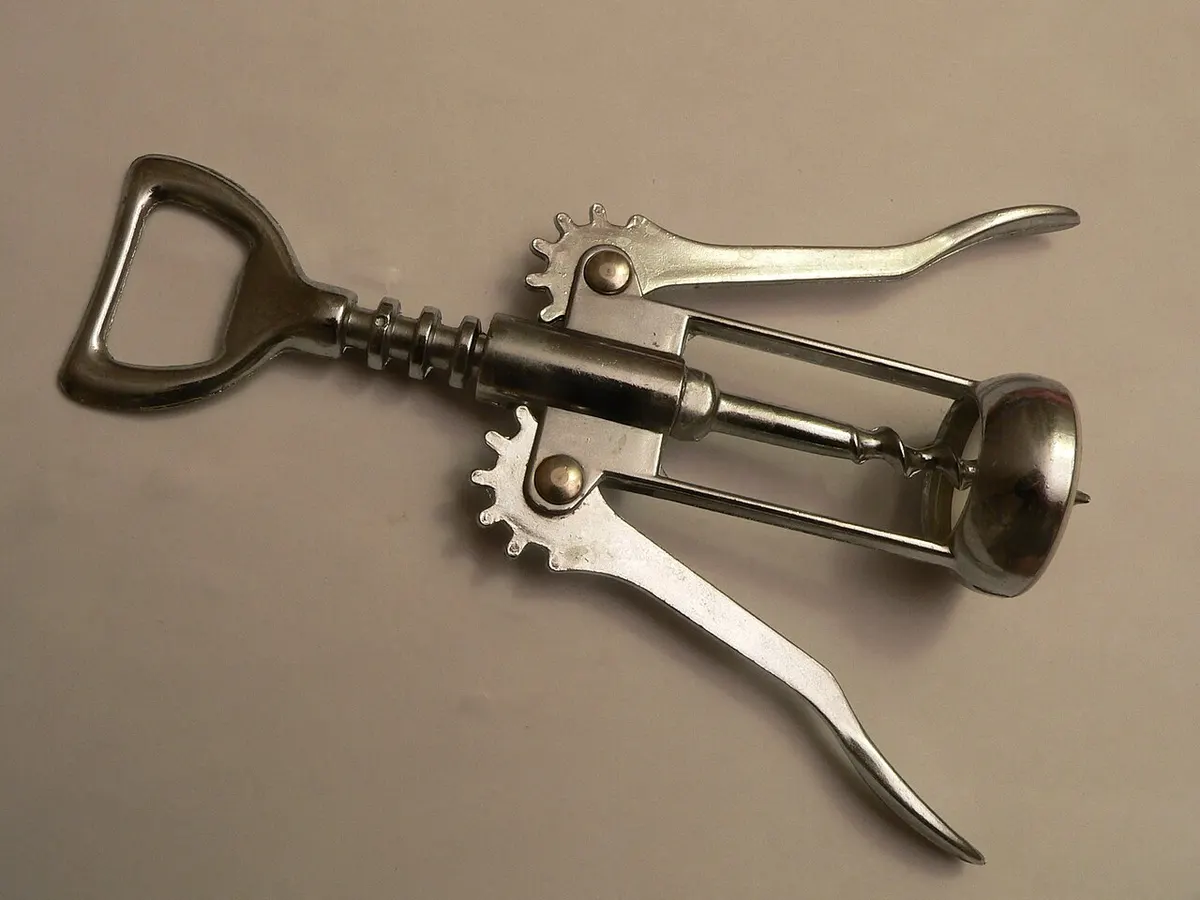
The classic winged corkscrew that lived in your parents’ kitchen drawer is the worst common design. It drives the worm too aggressively, the two arms create leverage in exactly the wrong direction, and it yanks the cork straight up in one motion, which is what shreds old corks. If you own one, keep it as a beer opener. Get a waiter’s key.
What we didn’t test
Sabres and blowtorches are fun and dumb. The Ah-So two-prong “butler’s friend” has a fan base for very old bottles where the cork is already crumbling, and it does work in expert hands, but for the other 99% of bottles it is slower and riskier than the waiter’s key. If you own a serious wine cellar with pre-1970 bottles, look into it. Otherwise, skip it.
Care and moderation
Rinse the worm after prolonged storage. Wipe electric bases dry before charging. Recycle corks; several states run cork-recycling programs.
And the obvious note: wine is a good time up to a point and a bad time after that. A standard glass is 5 oz. Have water on the table too. If you’re pouring for guests, offer them a good non-alcoholic option, our best non-alcoholic spirits list has a few that work in real cocktails. Never drive after drinking.
Bar upgrades we’d pair with the opener
A waiter’s key belongs in every home bar essentials kit. If you’re building out the rest of the bar, our best cocktail shaker sets roundup covers the other single most-used tool, and the best jiggers and bar tools guide covers the tiny things that make bigger differences than the tiny prices suggest.
Quick answers
What is the best wine opener overall? A double-hinged waiter’s key like the Pulltap’s Classic 500. Handles any cork, fits in a drawer, about $15.
Are electric wine openers worth it? Yes, if you open a bottle almost every night, have hand-strength issues, or host big dinners. Otherwise a waiter’s key is faster.
Winged corkscrew or waiter’s key? Waiter’s key. The winged version is the fastest way to shred an old cork.
How do I open a bottle with a waiter’s corkscrew? Cut the foil below the lip, drive the worm straight, hook the first hinge and pull halfway, hook the second hinge and finish, twist the cork off.
What if the cork breaks? Re-insert the worm at a steep angle and pull slowly. If it crumbles, push the rest into the bottle and strain the pour through a coffee filter.
Do I need a separate foil cutter? No. The knife in the waiter’s key handle does the same job.
The bottom line
Buy the Pulltap’s Classic 500 for $15, learn the two-step pull in five minutes, and you are done thinking about wine openers for the rest of your life. If someone in your house cannot use a waiter’s key, add the Rabbit Automatic Electric to the counter for them. That’s the whole shopping list.
Sources we used while researching: Wine Enthusiast on the waiter’s corkscrew, Wine Spectator on serving wine, and the Wikipedia entry on wine accessories.