We have been pitching in backyards since 2008, and horseshoes is still the game most people play half-wrong at the family barbecue. The court is not that hard to lay out. The scoring is not that hard to remember. But almost nobody agrees on cancellation versus count-all, and almost every set of house rules gets leaners wrong. So here are the official horseshoes rules from the National Horseshoe Pitchers Association (NHPA), plus the backyard variations that are actually worth keeping.
What are the official horseshoes rules for pit distance?
Stakes are 40 feet apart, center to center. That is the number the NHPA official rules use for adult men. Women, juniors, and seniors pitch from a foul line that puts them at 30 feet from the far stake, and kids under 9 can pitch from 20 feet. In casual backyard play, most groups just pick one distance and let everyone throw from it, which is fine as long as the group agrees before the first shoe flies.
The stakes themselves are one-inch iron or soft steel, sticking 15 inches out of the ground, and leaning about 3 inches toward each other (roughly 12 degrees off vertical). The lean gives ringers something to hang on, which sounds like a small detail until you watch a perfect throw bounce off a straight stake and roll into the weeds.
What are the official pit and court dimensions?
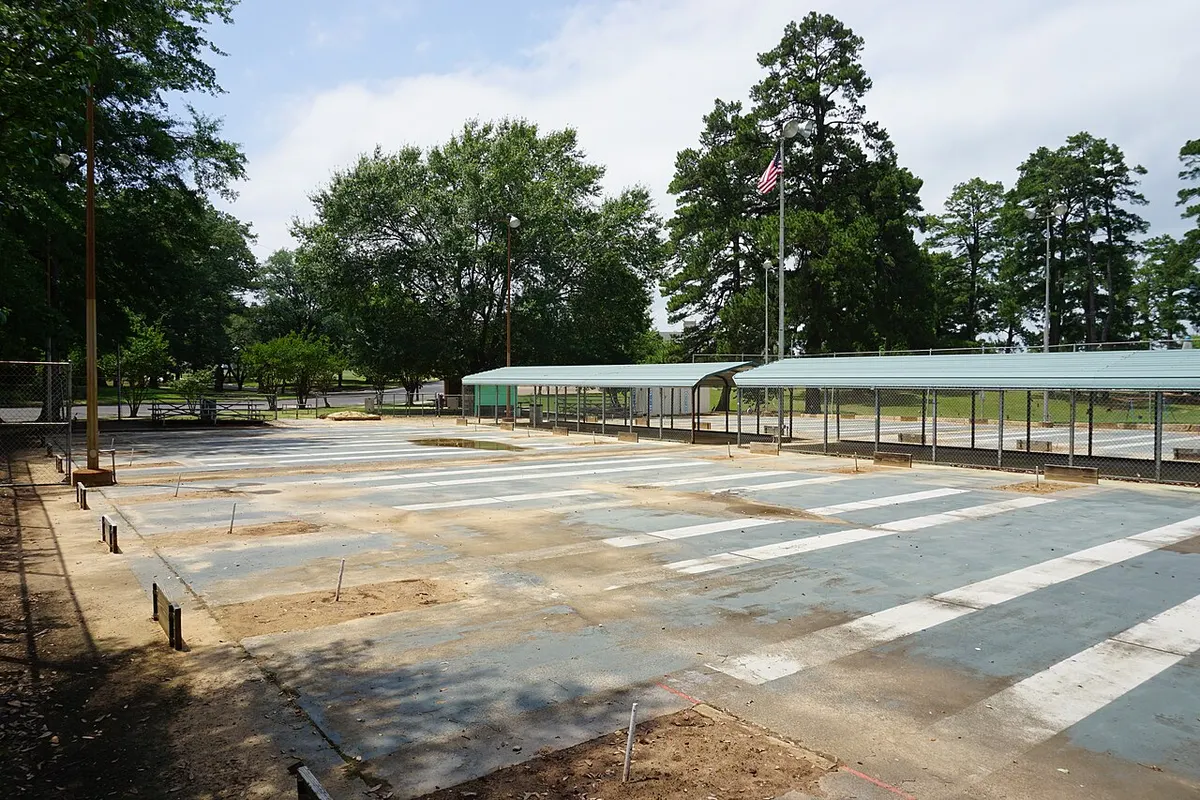
Each stake sits in the middle of a pitching box. The box holds a rectangular pit filled with loose sand, clay, or dirt so the shoes bury instead of skipping across the lawn. Sanctioned pits run 43 to 72 inches long and 31 to 36 inches wide. Backyard players usually go closer to the 36 by 43 inch minimum, which is enough to catch honest throws without turning the yard into a construction site.
| Spec | Regulation measurement |
|---|---|
| Distance between stakes | 40 feet, center to center |
| Stake diameter | 1 inch, iron or soft steel |
| Stake height above ground | 15 inches |
| Stake lean | About 3 inches toward opposite stake (12 degrees) |
| Pit length | 43 to 72 inches |
| Pit width | 31 to 36 inches |
| Fill depth | 4 inches minimum, loose sand or clay |
| Foul line, men | 37 feet from opposite stake |
| Foul line, women / juniors / seniors | 27 feet from opposite stake |
| Shoe weight | 2 pounds 10 ounces maximum |
If you want a full plan with lumber cuts, we already published how to build a horseshoe pit that covers the frame, drainage, and stake install. Do that once and you never touch it again.
How does horseshoes scoring work?
Two methods, and this is where every family game goes sideways. Pick one before you throw.
Cancellation scoring is what NHPA leagues use. Both players pitch two shoes each. Only one player can score in an inning, and matching shoes cancel each other out. A ringer beats a close shoe, but a ringer plus a close shoe from one player is canceled by two ringers from the other, and so on. Only the leftover, non-canceled points count. First to 40 (or 15, in some formats) wins.
Count-all scoring is what most youth leagues and casual backyard groups play. Everybody scores everything they throw, up to a max of 6 points per player per inning (two ringers). It moves faster, it is friendlier to beginners, and it does not require a rules lawyer at every pit. First to 21 or a fixed inning count wins.
| Scoring method | Who scores per inning | Ringer value | Best for |
|---|---|---|---|
| Cancellation | Only one player | 3 points (if not canceled) | League play, closer skill matches |
| Count-all | Both players | 3 points each | Backyard mixed groups, faster rounds |
Point values, either method:
- Ringer (shoe encircling the stake so a straight edge can touch both tips without touching the stake): 3 points
- Close shoe (within one horseshoe width, roughly 6 inches, of the stake): 1 point
- Anything farther out than a horseshoe width: 0 points
What is a leaner, and does it count?
A leaner is a shoe that ends up touching the stake but not encircled. In official NHPA rules, a leaner is worth exactly 1 point, the same as any other close shoe. That is it. No 2 points, no 3 points, no “half a ringer.”
We know, we know. Half the internet insists leaners are 2 points. That is a backyard convention some groups play, and there is nothing stopping you from keeping it, but do not tell your uncle it is the “real rule.” It is not. If you want tournament-legal scoring, a leaner is 1 point. If your crew wants a leaner to be 2 points because it looks cooler, agree on that in advance and move on.
What counts as a foul?
- Stepping past the foul line. Your front foot has to stay behind the foul line at the moment you release the shoe. Cross it and the throw is a foul shoe, scored zero even if it is a ringer.
- Wrong-order throws. Player with points from the previous inning pitches first the next inning. Throwing out of turn does not usually void the shoe in casual play, but in league play it can.
- Wrong shoes. Each player throws their own two matching shoes (usually painted red and blue). Mixing sets between innings gets confusing and is technically illegal in sanctioned play.
Broken or splintered stakes, shoes that hit the backboard and rebound into the pit, and shoes that touch anything outside the pit before landing all count as foul shoes in NHPA play. In the backyard, most crews just play it as thrown and move on unless something is genuinely broken.
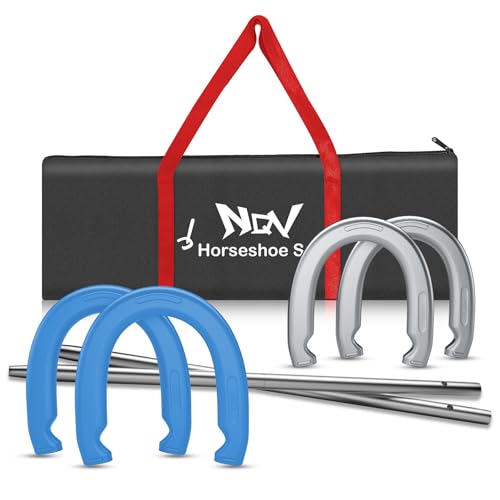 NQV Regulation Horseshoe Set. For a set you can actually use for both barbecues and league night, the NQV Regulation Horseshoe Set ships with four 2.5-pound drop-forged steel shoes (two red, two blue) and two 24-inch steel stakes. It is NHPA-approved for tournament play, which matters if you ever want your backyard scores to actually mean something outside the yard.
Two stakes, four shoes, and a place to bury the stakes. That is the minimum. Novelty rubber sets are fine for a poolside toss with kids, but they bounce out of the pit and off the stake in ways that make scoring nearly impossible. Steel shoes at the regulation 2.5 pounds behave the way the game was designed to behave.
| Setup level | What you get | Rough cost |
|---|---|---|
| Casual backyard / rubber set | Rubber or plastic shoes, thin stakes | $25 to $50 |
| Recreational steel set | 2 to 2.5 lb steel shoes, 20 to 24 in stakes | $40 to $80 |
| NHPA-approved tournament set | 2.5 lb drop-forged shoes, 36 in stakes, colored | $80 to $150 |
| Full permanent pit build | Framed boxes, sand fill, stakes set in concrete | $150 to $300 in materials |
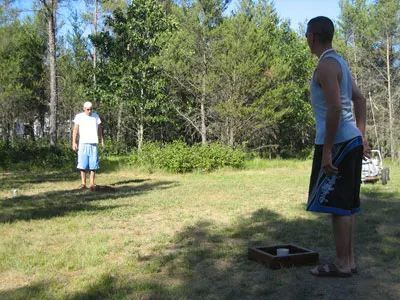
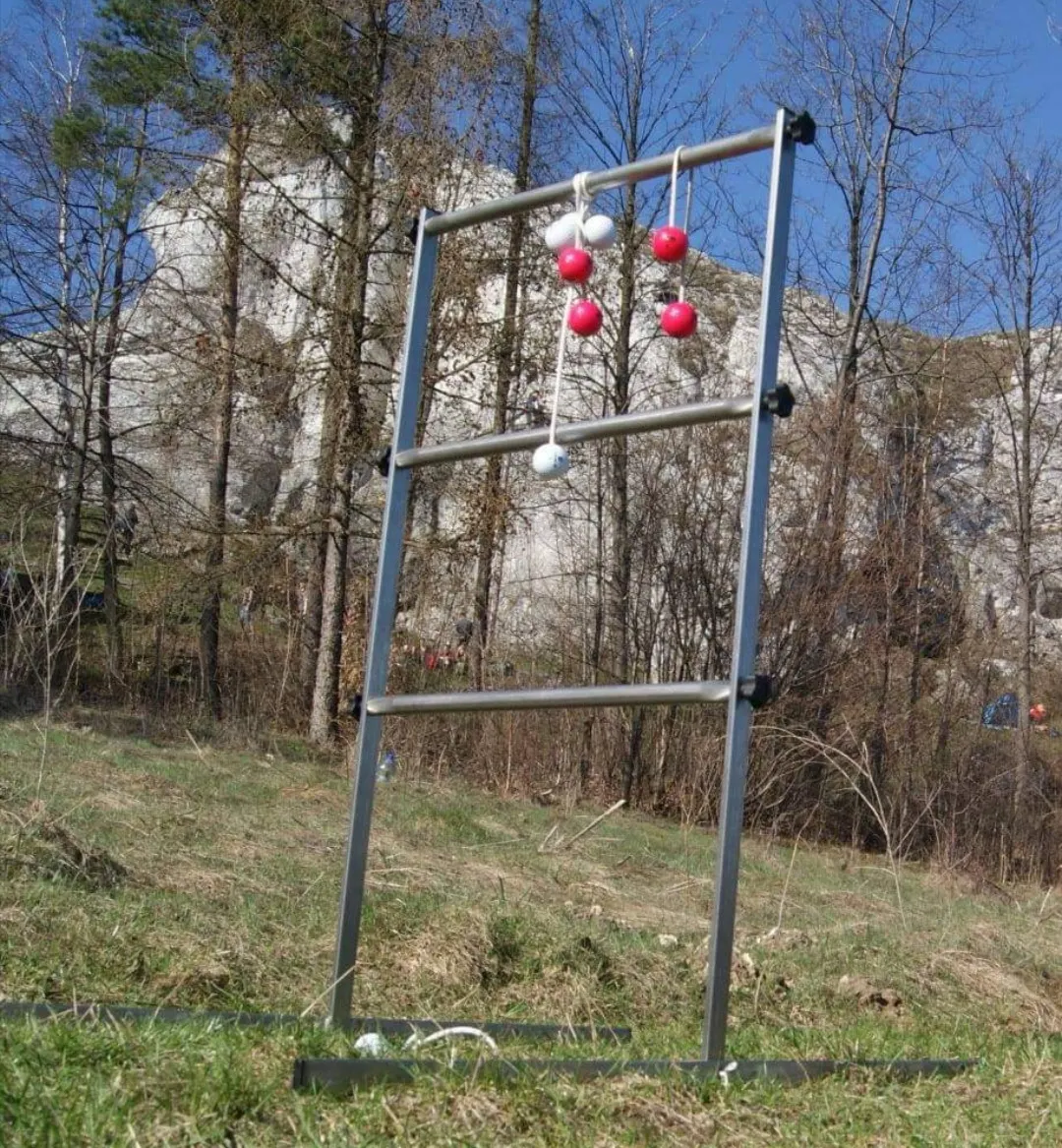
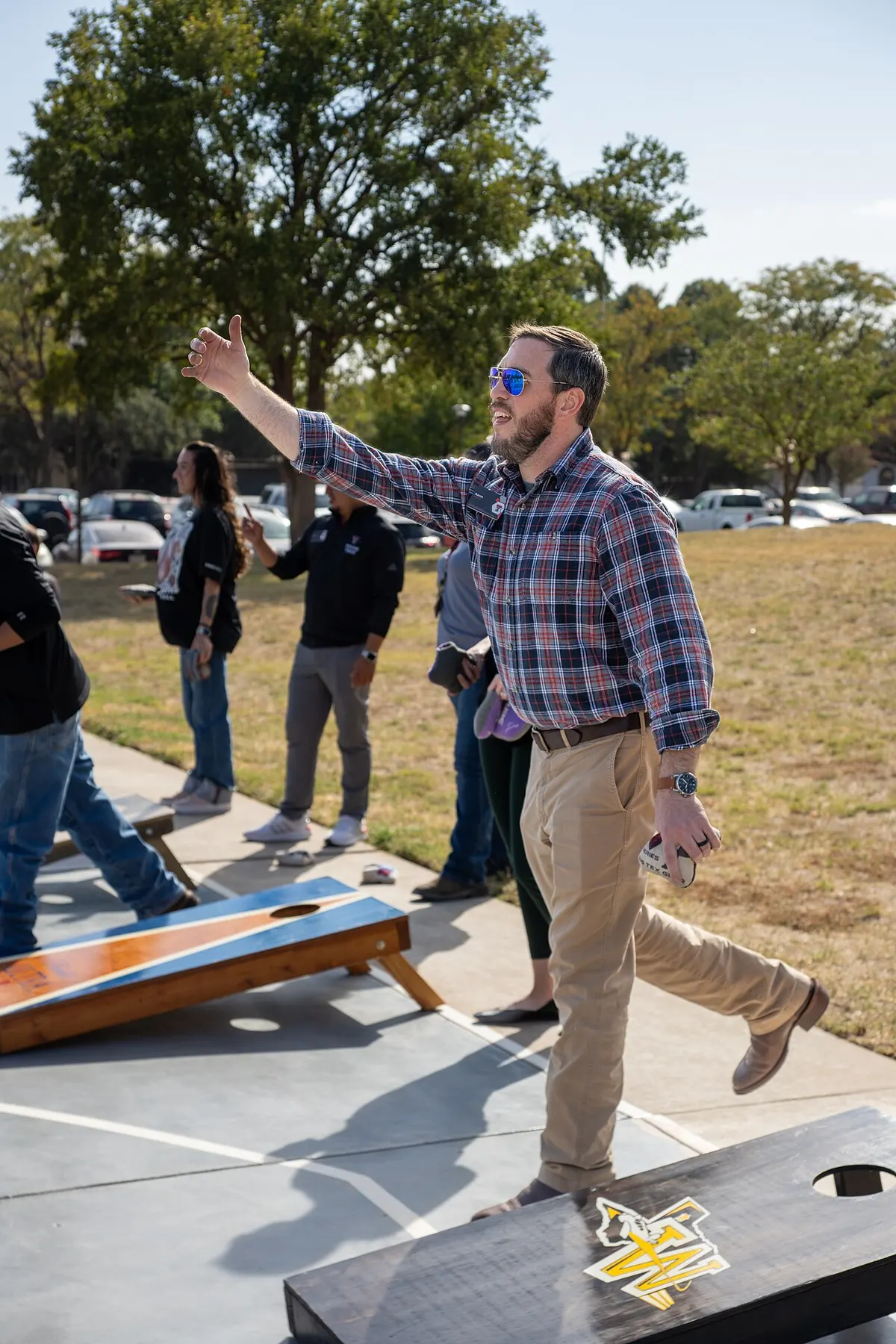
If you already have decent boards for cornhole, a horseshoe pit is the natural next backyard build. The two games run at very different distances, so you can actually set them up in the same yard without games colliding. Add ladder golf and washer toss and you have a full four-game outdoor rotation for a summer cookout.
What house rules are worth keeping?
Most backyard groups run close to count-all scoring with a few tweaks:
- Any-distance close shoe. Some crews count any shoe closer than the opponent’s as 1 point, no 6-inch rule. It is more forgiving on a sloppy pit but a little less satisfying when you actually get one tight to the stake.
- Leaner as 2 points. Not official, common in backyards. Fine if agreed upfront.
- Play to 15, not 21 or 40. Cuts the game to about 20 minutes, which is right for a party where the pit is one of four things going on.
- Best-of-three innings for beginners. Great for a mixed-age setup where the kids or grandparents want to play but do not want a full hour at the stakes.
Doubles rules, briefly
Two-on-two horseshoes is the same game with one twist: each team splits, one player at each stake. Your team throws all four shoes from your end, the opposing team throws all four from theirs. Only the players at the receiving stake score the inning. Then everyone stays put, and the players at the other pit throw the next inning. It doubles the pace without doubling the walking, which is why it is the default at league picnics and family reunions.
The quick answers
- Distance between stakes: 40 feet, center to center
- Foul line, men: 37 feet from opposite stake
- Foul line, women / juniors / seniors: 27 feet from opposite stake
- Stake height above ground: 15 inches, leaning about 3 inches toward opposite stake
- Pit size: 31 to 36 inches wide by 43 to 72 inches long, sand or clay fill
- Ringer: 3 points, shoe encircling the stake so a straight edge touches both tips clear of the stake
- Close shoe / leaner: 1 point, within about 6 inches of the stake
- Winning score: 40 (cancellation) or 21 (count-all), first team there wins
- Shoe weight: 2 pounds 10 ounces maximum in NHPA play
That covers the official horseshoes rules for distance, court, and scoring, plus the backyard calls worth settling before the first shoe leaves your hand. If horseshoes is the warm-up, get the main backyard event dialed in with our cornhole rules and best cornhole boards guide, or round out the summer lineup with ladder golf rules and washer toss rules once the horseshoes are back in the case.