We have been pouring whiskey sours behind this bar since 2008, and it is still one of the most-ordered classics on our shift. It is also one of the most-butchered. Most recipes online either drown the drink in sour mix, skip the shake that makes it feel like something, or hand-wave the egg white question. There is a right answer to all of it, and it is boring: measure carefully, shake hard, and decide up front whether you want the foam. We will get you there in one drink.
What is the classic whiskey sour recipe?
Two ounces of bourbon or rye, three-quarters of an ounce of fresh lemon juice, three-quarters of an ounce of simple syrup, and half an ounce of egg white if you want the foam cap. The IBA lists the whiskey sour as an official cocktail and dates the first written recipe to Jerry Thomas’s 1862 Bartender’s Guide, which means people have had 160-plus years to argue about the details. Our house build is this:
- Add 2 oz bourbon or rye, 3/4 oz fresh lemon juice, 3/4 oz simple syrup, and (optional) 1/2 oz egg white to a shaker.
- Dry shake hard for about 15 seconds. No ice yet.
- Add a big scoop of ice and shake again for 12 to 15 seconds until the tin frosts over.
- Double strain through a fine-mesh strainer into a chilled coupe, or over one large fresh ice cube in a rocks glass.
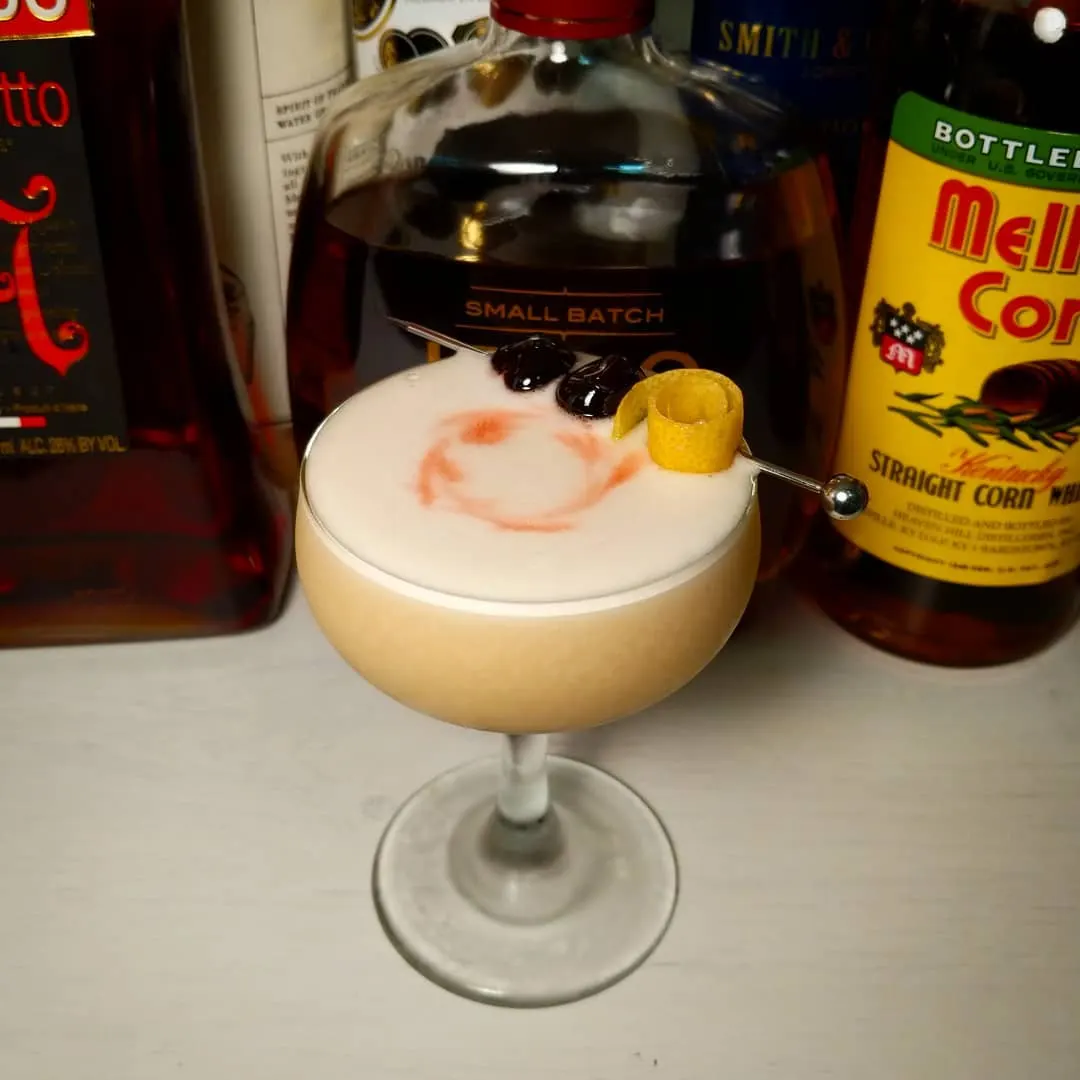
- Garnish with a brandied cherry and a lemon peel. A few drops of Angostura painted across the foam is the traditional flex.
That is the whole method. If you want to nerd out on the ratio, this is the classic sour spec (2 parts spirit, 1 part citrus, 1 part sweet) with the citrus and sweet each dialed back a hair from 1 oz to 3/4 oz. That change keeps the whiskey out front and stops the drink from tasting like lemonade.
Should you use egg white in a whiskey sour?
You do not need it. The drink is balanced without it and it will taste like a whiskey sour. What egg white adds is a silky, meringue-thick foam cap and a rounder mouthfeel, plus a canvas for the traditional Angostura dots on top. If you have ever seen a whiskey sour in a photo with a clean white lid of foam and a few red-brown drops floating on it, that is egg white.
Two things to know before you commit:
- Use a fresh, cold large egg. Half an egg white is about 1/2 oz. Save the yolk for hollandaise.
- Aquafaba (the brine from a can of unsalted chickpeas) is a legitimate vegan substitute at the same volume. It foams almost identically and has no chickpea flavor once shaken with citrus and spirit.
The dry shake below matters more than the egg white choice. A properly shaken egg-white sour has a cap you can float a garnish on. A lazy shake gives you a sad film that collapses in ninety seconds.
Which whiskey works best in a sour?
Bourbon is the default and it is the friendlier pour if the drinker is new to whiskey. Rye is the historical pick from the drink’s 1800s heyday, and a spicy 100-proof rye gives the sour more spine against the lemon. Either works. Proof matters more than brand: anything under 90 gets pushed around by the citrus and the syrup, and the drink turns thin.
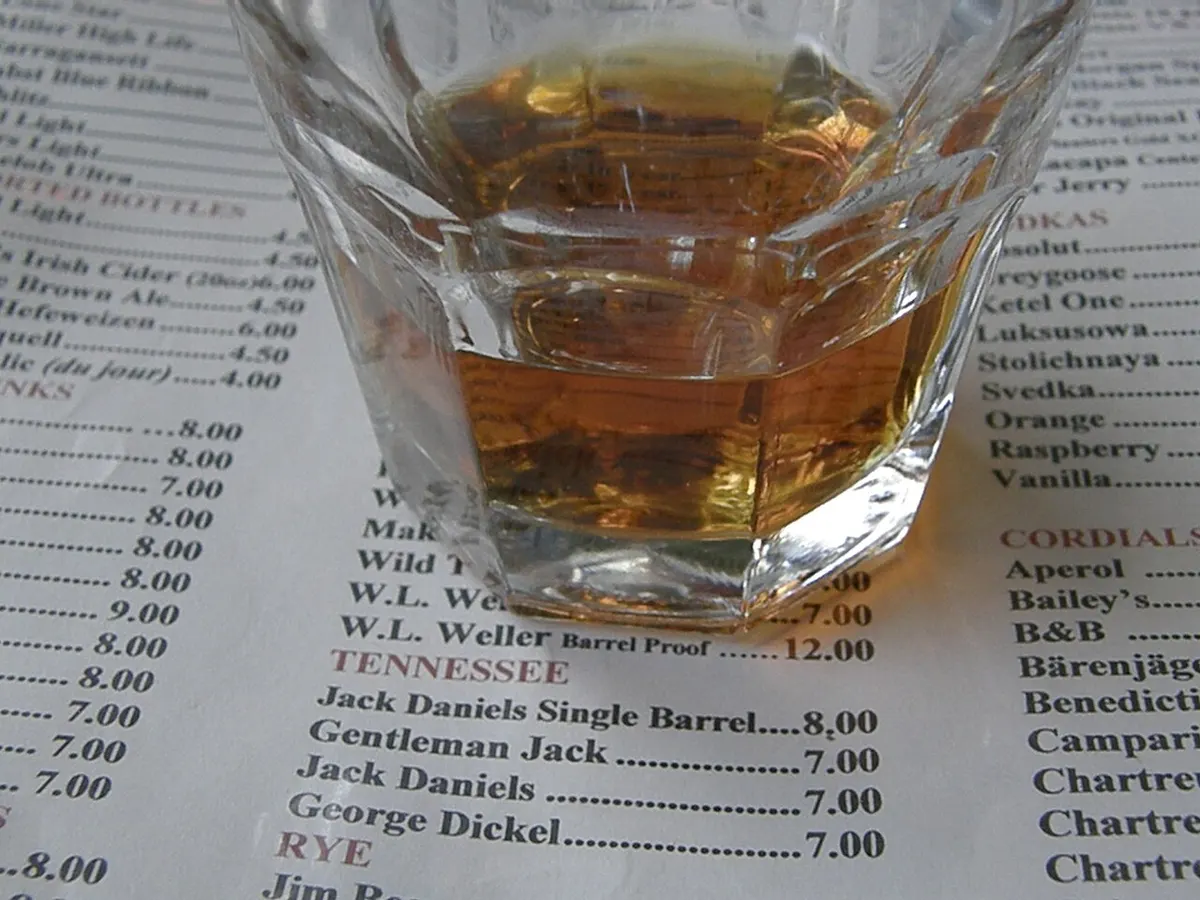
Here is how the whiskeys we keep in the well stack up in a sour, priced from a recent Chicago-area run:
| Whiskey | Style | Proof | Approx. price | Best for |
|---|---|---|---|---|
| Bulleit Bourbon | High-rye bourbon | 90 | $37 | Bright, structured house sour |
| Buffalo Trace | Classic bourbon | 90 | $32 | Balanced everyday build |
| Woodford Reserve | Wheated-leaning bourbon | 90.4 | $45 | Rounder, softer, crowd-pleasing |
| Rittenhouse Rye | Bottled-in-bond rye | 100 | $28 | Textbook rye sour with backbone |
| Old Grand-Dad Bonded | Bonded bourbon | 100 | $28 | Value pick, more punch than price |
If you already keep whiskey for our old fashioned recipe, you have what you need for a sour. Do not open a $70-plus bottle for this drink. The citrus and syrup will flatten anything too subtle. Save the higher-end pours for neat drinking, and see our best whiskey glasses guide if you want to give those bottles a proper glass.
The dry shake, step by step
This is the technique that separates a great whiskey sour from a passable one, and it is the entire reason egg-white sours look the way they do. Shaking without ice first (a dry shake) lets the mechanical agitation denature the egg proteins and pull air into the mix, which builds the foam. Add ice too early and the cold slows the protein action and you end up with a thin film that collapses fast.
The Oxford Companion to Spirits and Cocktails traces the dry shake as a modern refinement of a technique that goes back to bartenders in the late 1800s working around back pain from long ice-shake sets. The reverse dry shake (ice shake first, dry shake second) got popular around 2010 to 2011 and is credited to Greek bartender Aristotelis Papadopoulos. Both methods work. We use the standard order because it is faster and the foam holds long enough to garnish before it collapses.
Our step-by-step, timed:
- Build the drink in a shaker. Bourbon, lemon, syrup, egg white. No ice.
- Close the tin. Shake hard for 15 seconds. You will hear the sound go from sloshy to whooshy as the foam builds.
- Open the tin. Add a big scoop of fresh ice, filling the small tin about two-thirds.
- Close and shake again for 12 to 15 seconds until the outside of the tin frosts and your hands are stinging cold.
- Double strain (hawthorne strainer plus a fine-mesh conical strainer) into a chilled coupe. The fine mesh catches any bits of egg chalaza that did not break down.
If you do not have a fine-mesh strainer, a single strain still works, you may just see a thin white ring of protein around the top of the foam. Not a dealbreaker.
Tools we actually use for the shake
You can make a whiskey sour with a mason jar and a soup spoon, and we have done it. But three pieces of gear turn this into a drink you can crank out for a group in under five minutes, and none of them cost much.
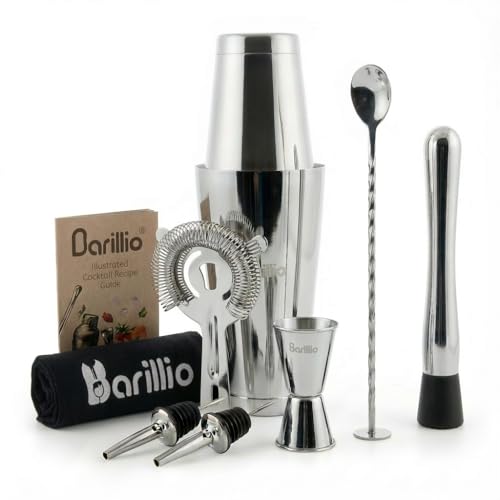 Barillio Boston Shaker Set (9-piece). A weighted, leakproof Boston shaker plus jiggers, spoon, strainer, and muddler. The two-tin design chills faster than a cobbler shaker and holds enough volume to shake two sours at once. Our full best cocktail shaker sets roundup covers the field, but this is the value pick.
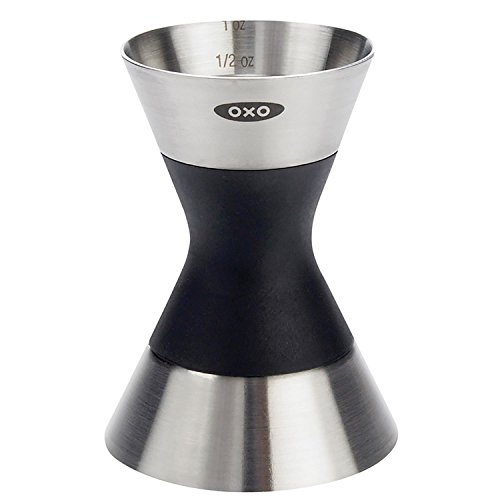 OXO SteeL Double Jigger (1 oz / 2 oz). Angled inside walls with etched half and quarter-ounce lines, so you can measure the 3/4 oz lemon and syrup pours by sight. A jigger is the difference between a great sour and a soapy one. See our best jiggers and bar tools breakdown for other picks.
 Cocktail Kingdom Japanese Jigger (1 oz / 2 oz). The step-up pick if you make cocktails often. Taller, thinner walls give you cleaner pours, and the deep bowl is what most working bartenders reach for. No internal lines, so measure to the rim.
Common whiskey sour mistakes to skip
Every bad whiskey sour we have tasted in twenty years came from the same short list of errors. If your sour is not landing, it is almost always one of these.
- Sour mix. Bottled sour mix is corn syrup, artificial citric acid, and yellow dye. It kills the drink. Fresh lemon juice, squeezed within the hour, and 1:1 simple syrup you can make in three minutes on the stove.
- Too much sweet. Some old recipes call for 1 oz of syrup. That works if your lemons are very tart, but standard supermarket lemons need 3/4 oz. Trust your palate over an old ratio.
- Wet-shake only. No dry shake, no foam. If you are using egg white, dry shake first. Every time.
- Cheap whiskey under 80 proof. The drink turns thin and boozy in a bad way. Stay in the 90 to 100 proof range.
- Warm glass. A room-temperature coupe warms the drink in under a minute and the foam collapses. Chill the glass.
- Over-garnishing. A single brandied cherry and a lemon peel. That is it. No orange wheel, no straw, no umbrella.
If you nailed the shake but your sour still tastes off, the problem is usually the syrup. Store simple syrup covered in the fridge and use it within two weeks; older syrup gets thinner and less sweet as the sugar re-crystallizes.
Variations that actually hold up
The sour is a template, and it takes changes well. A few we keep in rotation:
- Gold Rush. Swap simple syrup for honey syrup (2 parts honey to 1 part hot water, stirred). Same lemon and whiskey. The Milk & Honey classic from the early 2000s.
- New York Sour. Standard whiskey sour with a 1/4 oz float of dry red wine (Malbec or Syrah) over the back of a spoon on top. Also called a Boston sour or Continental sour in some old bar guides.
- Penicillin. Not a sour by name but same DNA: 2 oz blended scotch, 3/4 oz lemon, 3/4 oz honey-ginger syrup, 1/4 oz smoky Islay scotch floated on top. Sam Ross’s 2005 modern classic.
- Amaretto Sour. Swap the whiskey for 2 oz amaretto, dial the syrup down to 1/2 oz (amaretto is already sweet). Egg white recommended. Jeffrey Morgenthaler’s rebuild of this drink is the reference version.
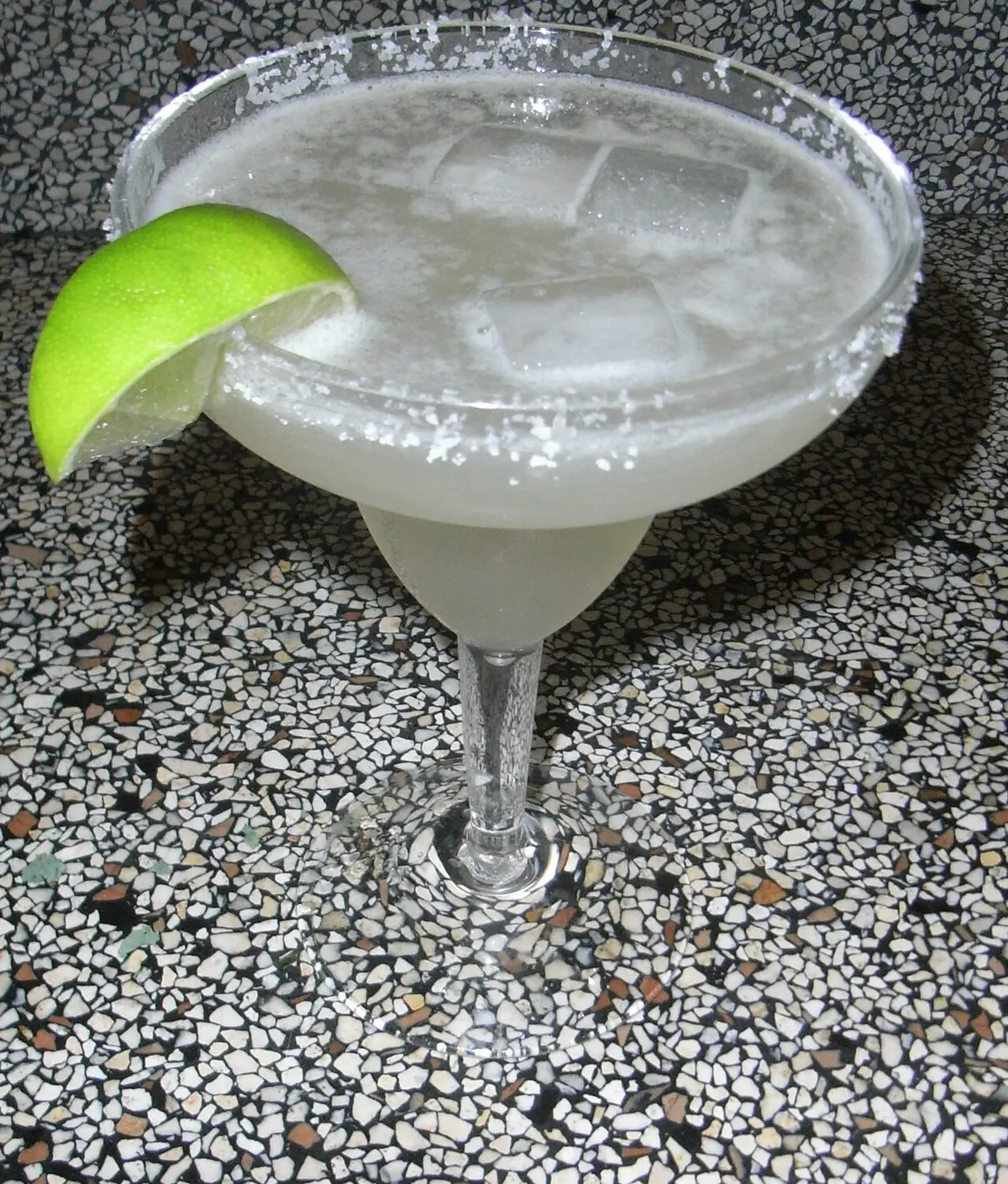
If you want a lighter riff, our margarita recipe uses the same sour template with tequila and lime. Same math, different spirit.
Quick answers
What is the exact whiskey sour ratio? 2 oz bourbon, 3/4 oz fresh lemon juice, 3/4 oz simple syrup, and 1/2 oz egg white if you want the foam. Dry shake, wet shake, double strain.
Do you need egg white in a whiskey sour? No. The drink is balanced without it. Egg white adds a silky foam cap and a rounder texture. Aquafaba (chickpea brine) is a solid vegan substitute at the same volume.
What whiskey works best in a sour? A 90 to 100 proof bourbon or rye. Bulleit, Buffalo Trace, Woodford Reserve, and Rittenhouse Rye all make excellent sours. Lower proof gets pushed around by the lemon and syrup.
How strong is a whiskey sour? About 20 to 22 percent ABV, roughly 1.6 standard drinks per serving. It goes down easy, which is a reason to pace yourself and alternate with water.
Why do you dry shake first? Shaking without ice denatures the egg white proteins and builds a thick, meringue-like foam. Adding ice too early cools the mix and shortens the foam.
Can I use bottled lemon juice? No. Bottled lemon tastes flat and dulls the drink within hours of opening. Fresh-squeezed is not optional in a sour.
What is the difference between a sour and a Boston sour? A Boston sour is a whiskey sour with a red-wine float on top (usually a dry, fruity red). Same base drink, floated 1/4 oz of wine over the back of a spoon.
Can I batch whiskey sours for a party? Yes for the whiskey, lemon, and syrup. Combine and refrigerate. Never batch the egg white; add it to each shaker and dry shake individually.
A note on drinking responsibly
A whiskey sour is about 20 percent ABV and drinks like lemonade, which is exactly why it deserves respect. One sour is a drink, three sours in an hour is a bad idea. Pace yourself, alternate with water, and never drive after any amount of alcohol. If you are shaking these for guests, keep a pitcher of ice water on the bar and pour it as often as you pour cocktails. Everything on this site assumes you are of legal drinking age.
For the deeper history of the drink, the IBA official whiskey sour listing is worth a read, and the PBS NewsHour breakdown of the modern sour revival covers how the drink came back from its 1970s sour-mix wilderness years.