We have been making old fashioneds behind this bar since 2008, and the drink still trips people up. Not because it is hard, it has four ingredients, but because most of the versions floating around the internet either drown the whiskey in orange juice or bury it under a mountain of muddled fruit. The real old fashioned recipe is closer to a chemistry problem than a fruit salad. Get the ratio right, respect the ice, and it will taste like the drink your grandfather actually ordered before somebody started dumping cherry syrup into it.
What is the classic old fashioned recipe?
Two ounces of whiskey, a quarter ounce of rich demerara syrup, two dashes of Angostura bitters, one big ice cube, and an expressed orange peel. That is it. No orange wedge crushed with a muddler, no soda water, no cherry juice. The IBA lists the drink as an official cocktail and dates its name to the 1880s, which should tell you the modern add-ons are recent inventions your bar cart does not need.
Here is the exact build we use:
- Add a quarter ounce of 2:1 demerara syrup to a heavy rocks glass.
- Two dashes of Angostura bitters.
- Two ounces of bourbon or rye whiskey.
- One large ice cube (a 2 inch sphere or square).
- Stir gently with a bar spoon for about 20 seconds.
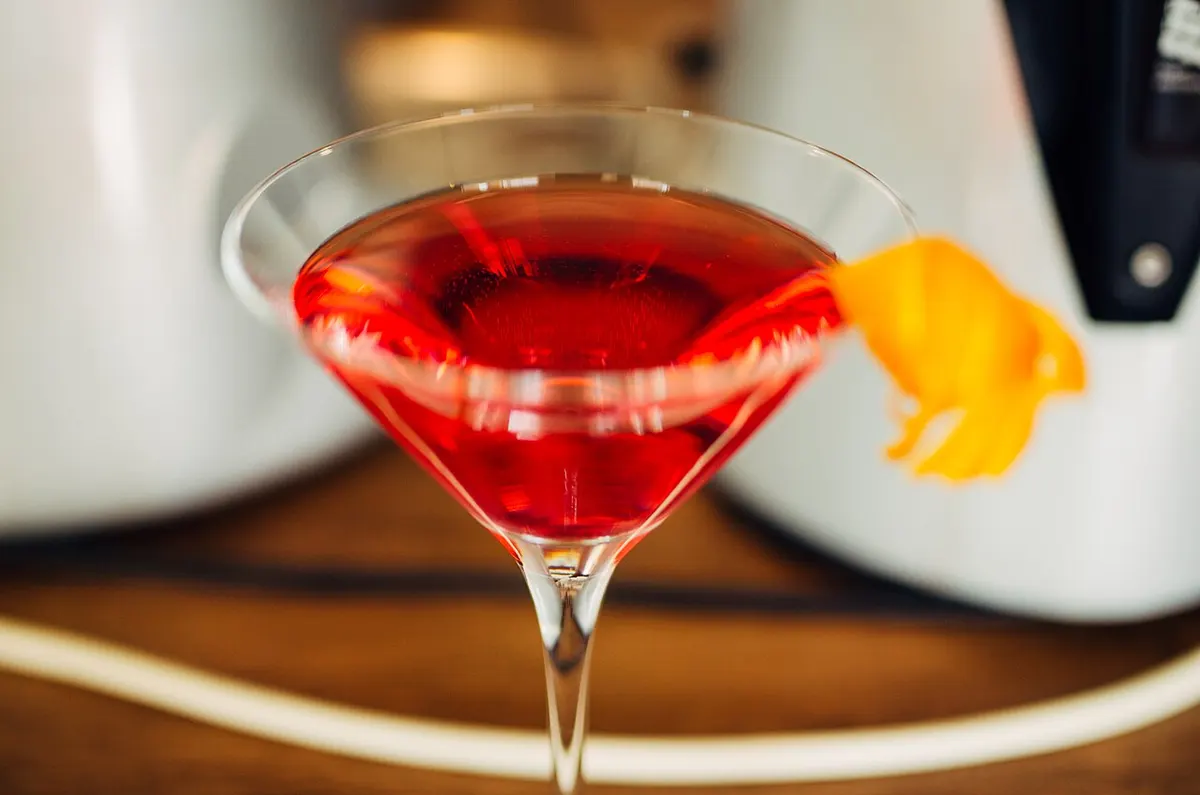
- Cut a wide strip of orange peel, hold it skin-side down over the glass, and pinch it hard to express the oils across the surface. Rub the peel around the rim, then drop it in.
That is the whole method. Some bartenders build the drink in a mixing glass and strain it over fresh ice, and if you want a colder pour that works too. We build in the glass because the drink is supposed to open up as the ice melts, and the second stir a few minutes in is half the point.
Bourbon or rye: which whiskey belongs in an old fashioned?
Both. The IBA official recipe lists bourbon or rye whiskey, and the choice comes down to what you want the drink to taste like. Rye is the historical pick because the cocktail predates the modern bourbon boom, and a spicy 95 to 100 proof straight rye gives the drink its structural spine. Bourbon rounds everything out with more corn sweetness and a softer finish.
We keep two bottles on the rail for old fashioneds, one of each. When we want the drink to snap, we reach for a rye. When guests are new to the cocktail and think they hate whiskey, we pour bourbon and watch them change their minds.
How the common pours compare
| Whiskey | Style | Proof | Approx. price | Best for |
|---|---|---|---|---|
| Bulleit Bourbon | High-rye bourbon | 90 | $37 | Spicy, structured old fashioned |
| Woodford Reserve | Wheated-leaning bourbon | 90.4 | $45 | Smooth, crowd-pleasing pour |
| Buffalo Trace | Classic bourbon | 90 | $30 to $45 | Balanced everyday build |
| Rittenhouse Rye | Bottled-in-bond rye | 100 | $28 | Textbook rye old fashioned |
| Old Forester 100 | Bourbon | 100 | $30 | Value pick, holds up to ice melt |
Prices are what we have seen at Illinois and Wisconsin retailers this year and will drift a couple dollars in either direction depending on your state. Any of these makes a good drink. If you want us to talk you out of a hundred dollar bottle for a mixed cocktail, we will, save the good stuff for a Glencairn pour.
Sugar cube, simple syrup, or demerara?
Demerara. This is the biggest upgrade most home bars can make to their old fashioned recipe, and it costs about three dollars in ingredients.
The IBA method calls for muddling a sugar cube with bitters and a splash of water. It works, it is traditional, and it also leaves half the sugar undissolved at the bottom of the glass unless you stand there muddling for a minute. Simple syrup (1:1 sugar to water) dissolves cleanly but dilutes the drink faster and tastes flat.
Rich demerara syrup (2:1 demerara sugar to water) is the fix. Demerara is a partially refined cane sugar that carries soft molasses notes, and the 2:1 ratio means you use less liquid to hit the same sweetness. Less liquid means less unwanted dilution. The molasses lift plays into the caramel and vanilla notes already in the whiskey. You end up with a rounder, richer drink that tastes like the whiskey is doing the talking.
To make it: dissolve one cup of demerara sugar in a half cup of hot water, stir until clear, cool, and refrigerate. Keeps three to four weeks. Costs less than a bottle of premade sweetener and outperforms every one we have tasted.
Do I really need one big ice cube?
Yes, and it is not a bartender affectation. The math on ice is simple: a single 2 inch cube has less surface area relative to its volume than three or four small cubes, which means it melts slower and dilutes the drink less. In a spirit-forward cocktail like this one, where the whole appeal is tasting the whiskey, that difference is the difference between a great drink at minute six and a watered-down one.
If you own silicone sphere or square molds, use them. If you do not, we have a whole rundown in our guide to the best ice molds for cocktails that covers the ones actually worth buying. In a pinch, freeze water in a small tupperware and chip a piece out with a serrated knife. Whatever you do, do not fill the glass with fridge dispenser ice and expect the drink to hold up.
What about the orange peel?
Fresh, wide, and expressed. The peel is not a garnish for looks, it is an ingredient. When you pinch it over the glass, you spray a fine mist of citrus oil across the top of the drink, which is the first thing your nose gets on every sip. That aromatic layer is what separates a good old fashioned from a bland one.
Cut the peel with a Y-peeler if you have one, going for a strip about an inch wide and two to three inches long. Try to avoid the white pith, which is bitter without being useful. Hold the peel skin-side down about an inch over the glass and pinch it in half, hard. Rub it around the rim, then drop it in. Skip the muddled orange wedge entirely, the pith and juice throw the whole drink off balance.
What glass should I use?
A heavy double old fashioned glass, 10 to 12 ounces. The weight matters, thin-walled glasses get warm in your hand and skew the pour. If you are building your bar setup from scratch, we walked through the whole rack in our home bar essentials piece, and glassware gets its own guide in best whiskey glasses.
What are the most common mistakes?
We have watched people build this drink for eighteen years and the same handful of errors come up over and over.
Too much syrup. A quarter ounce is plenty. If your old fashioned tastes like dessert, cut the sweetener before you change anything else.
Cold whiskey. Chilling the bottle mutes the aromatics you paid for. Room-temperature whiskey plus one big cube is the play.
Muddled fruit. This came in with the 1990s cherry-and-orange-wedge school and never left. The classic old fashioned recipe does not include muddled anything. If you want a fruit-forward drink, make a whiskey sour instead.
Cheap bitters. Angostura is not expensive. Buy the real bottle, use two dashes, done.
Overstirring. Twenty seconds is enough with a big cube. Any longer and you dilute past the sweet spot.
Quick answers
What is the exact old fashioned ratio? 2 oz whiskey, 0.25 oz rich demerara syrup (2:1), 2 dashes Angostura bitters, expressed orange peel. Build in the glass over one large ice cube.
How strong is an old fashioned? About 30 percent ABV, roughly 2.4 standard drinks in a single serving. This is a slow-sipper, not a shooter. Pace yourself, alternate with water, and know your limits.
Should you use a cherry? Optional. A good Luxardo or Amarena cherry is fine as a garnish. Skip the neon red maraschinos and their sweet syrup, which throw off the balance of the drink.
Bourbon or rye for beginners? Bourbon. The corn sweetness is friendlier if you are new to whiskey. Move to rye once you know what you are tasting.
Does the whiskey brand matter that much? Less than the proof and the age. Any 90 to 100 proof bourbon or rye in the $25 to $45 range makes a great cocktail. Save the higher-end bottles for neat pours.
Can I batch this for a party? Yes. Multiply the whiskey, syrup, and bitters, stir them together, refrigerate, and pour 2.5 oz per drink over fresh ice. Do not add the peel until service.
A note on drinking this responsibly
An old fashioned is a strong drink. Two ounces of 100 proof rye in one glass is more alcohol than most beers, and it hits differently because you sip it slowly and your body has time to absorb it. We treat these as one-per-hour pours, keep water in a second glass on the coaster, and never build a second one for someone who is already loose. The whole point of learning this recipe well is so you enjoy the cocktail, not the hangover. This site assumes you are of legal drinking age and drinking on your own terms.
For history nerds, the drink’s roots are covered pretty thoroughly on the Wikipedia entry and the current spec sits on the IBA official cocktails list. Both are useful if you want to trace where the modern build came from and how bartenders talk about it now.
That is the whole old fashioned recipe as we make it. Four ingredients, one glass, one big cube. Make it twice this weekend and you will never order a bad one at a bar again, because you will know exactly what to ask for.